
The Origin
Built on 60 years of research into what it means to be truly heard
In the 1960s, Charles and Ava Berner spent 20,000 hours researching what actually happens when communication is complete.
Their finding: when a communication cycle closes without advice, reaction, or interruption, there are no residuals. Nothing gets stuck. The person speaking lands inside themselves.
Ava Berner structured this as the dyad in 1965. The first Enlightenment Intensive ran in July 1968: 26 people, Mojave Desert, five days. Participants had breakthroughs expected to take months.
Juliette Karaman arrived at the same principles independently, through fifteen years of couples work, in the room rather than the lab. The Communication & Intimacy Cards are built on what both lines of research confirmed.

The Principle
Talking is not the same as being understood.
The speaker is not finished simply because they have spoken. A communication is complete when the listener has understood it. Everything below exists to carry a communication all the way to understanding, and then stop there.
"We talk all the time. Talking doesn't mean we've been understood."
How It Works
15 minutes. One card. One prompt, the whole time.
No preparation. No agenda. Just a card and the willingness to be in the room with each other. This is not a deck of good questions. It is a structured way of communicating.
One person picks a card and reads the prompt aloud.
The listener responds only with: Thank you. Clarify that. Summarise that.
Once you reach "Thank you," swap roles. Same prompt, back and forth.
The repetition is the point. Each pass goes a little deeper.
Before You Start
Agree to the container before anything vulnerable gets said.
Say it out loud, together, before the first card is read:
Then ask the question that makes it real:
How One Turn Moves
There is a pause built into this. It does not begin with talking.
The Three Responses
The listener has exactly three options. That's it.
No fixing. No interrupting. No debating. When someone knows you cannot correct them or agree or disagree, they speak differently. Something opens. This is what makes people feel seen, heard, and understood.
I understood you. Nothing else needs to happen. Switch roles.
I am listening, and I do not yet understand. The speaker adds what was missing, often not more words, only the piece that makes it land.
There is too much here for me to understand it. The speaker takes a breath, finds the bottom line, and gives one clear communication.
Summarise that is the superpower. It asks the speaker to discover what they are actually trying to say rather than unloading everything they are thinking. Clarify and Summarise are never an opening for another conversation, they carry the communication to understanding, and then you return to Thank you.
The Rules That Make It Safe
The structure is what creates safety, so both people know what to expect.
One turn equals one communication
Someone can believe you do not understand me while handing their partner five thoughts, three explanations and two grievances in a single turn. The structure distils that until the other person actually can understand them.
Receive, do not extract
The listener stays quiet, and also stops pulling the communication out nonverbally: no leaning in, no excessive nodding, no prompting with the face.
Do not ride their communication
You do not automatically use your next turn to react to what you just heard. If a "yeah, but" rises up, let it go for now, take in the prompt again, breathe, and find a communication that is yours. If the same thing keeps arising after many turns, that is far less likely to be an automatic rebuttal and much more likely to be what is genuinely there for you.
Stumbling is part of it
Early on, people explain, qualify and pile on context because they are trying so hard to be understood. That is exactly where Clarify that and Summarise that earn their keep.
Why The Repetition Matters
The first answers are surface swimming.
This is not a conventional back-and-forth discussion. Staying with the same prompt makes enough space for communications to surface that would otherwise stay buried. Another layer appears, then another. I thought I had answered this. Oh. There is more.
How It Ends
When the timer goes, let it settle. Do not process it.
The person speaking finishes their one communication. The listener makes sure they have understood it and gets to Thank you. The Dyad is complete.
"You have added the coffee and the water and stirred everything up. The grounds are floating everywhere. You do not need to do something with them straight away. Let them settle."
Acknowledging the experience is welcome, wow, that went deep. What does not belong here is when you said that thing about, or defending, correcting, or challenging what your partner revealed. Turning the fifteen minutes into a discussion afterwards would undo the safety of the whole structure. This is the second layer of trust: what I reveal in the Dyad will not be used against me once it ends.
If something stays with you, ask for consent to reopen it, later, as its own conversation:
"After working with over six hundred couples and thousands of clients, I noticed the same thing: what people want most is to be seen. To be heard. To feel understood."
— Juliette KaramanWhy It Works
A paradox: the listener has less to do, so the speaker feels more held.
This is Berner's finding made tactile. When the communication cycle is truly complete, there are no residuals. The person speaking lands inside themselves.
People consistently report after their first session: I have never felt so seen.
The three-response framework mirrors the clean-listening structures used in NVC, somatic practice, and couples therapy. What makes this different is that clients carry the container home and keep using it between sessions.
Clinical Application
For therapists, coaches, and somatic practitioners
Introducing it to clients:
"I'm going to give you a method that removes the need to know how to respond. There are only three things you're allowed to say. Everything else is off the table. That's not a restriction. That's the point."
In session:
One card per person. Minimum 15 minutes each. No debrief required. The processing happens in the nervous system, not in analysis.
As homework:
Designed to be used independently between sessions. Clients do not need a practitioner present. The goal is a conversation practice that lives outside the therapeutic container and compounds over time.


The Decks
Two physical decks. One digital collection.
Each deck is structured into distinct sections so clients are never stuck in one emotional register. The Dyad Protocol works with all of them: one card, one reader, minimum 15 minutes.
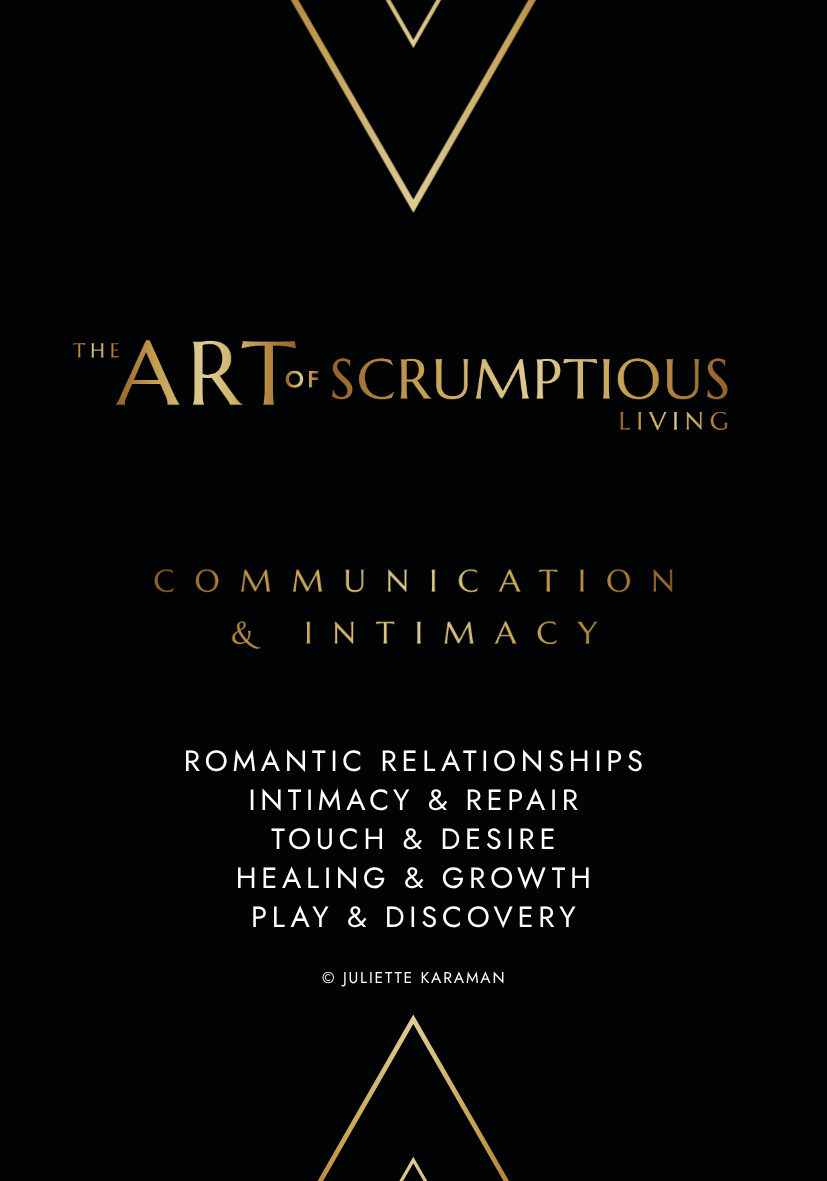
Communication & Intimacy Cards
Couples
For partners at any stage: new, long-term, in repair, or deepening. Five sections move couples from everyday connection through to desire, body-based truth, and old wounds. The depth is built in.
- Romantic Relationships · 30 cards
- Intimacy & Repair · 30 cards
- Touch & Desire · 30 cards
- Healing & Growth · 30 cards
- Play & Discovery · 30 cards
 Romantic Relationships
 Intimacy & Repair
 Touch & Desire
 Healing & Growth
 Play & Discovery
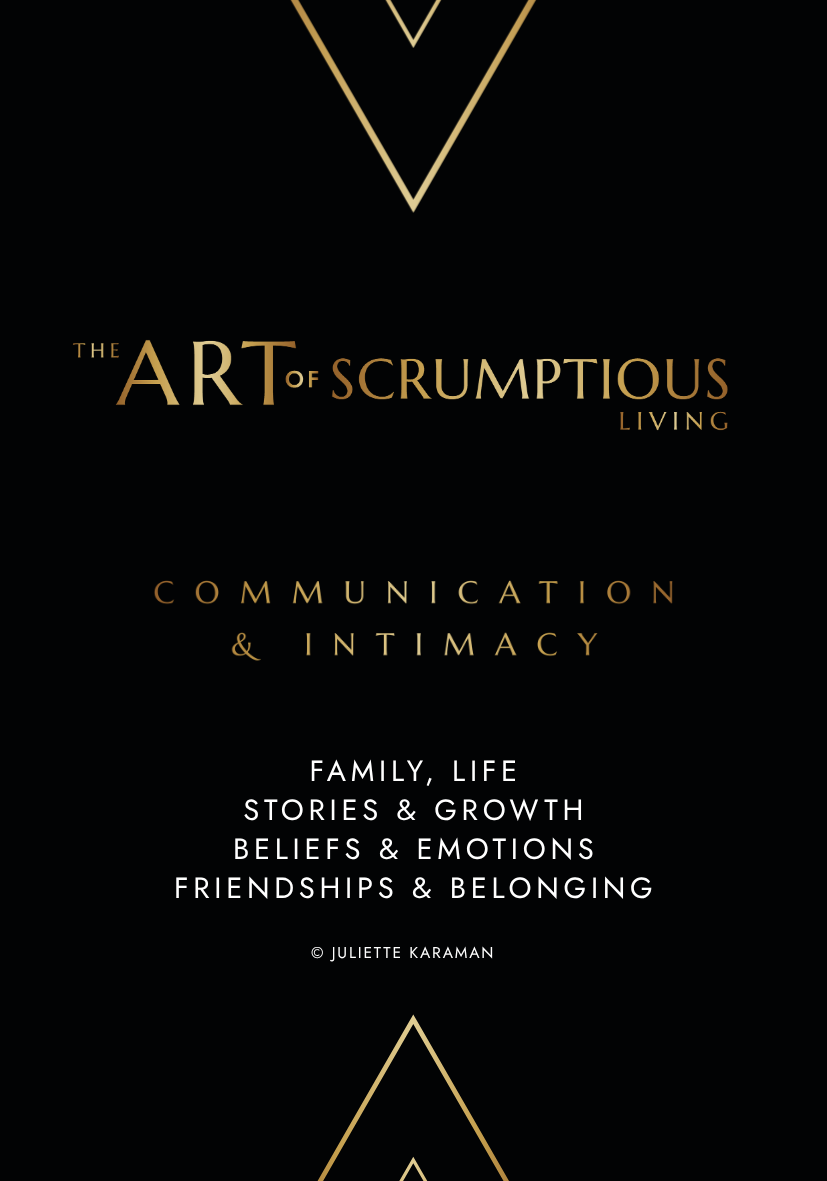
Communication & Intimacy Cards
Family & Friends
For any relationship where more depth is wanted. Works across generations: family dinners, adult siblings, long friendships, coaching cohorts, therapeutic groups. Five sections move from everyday life into the things rarely said.
- Family · 30 cards
- Life · 30 cards
- Stories & Growth · 30 cards
- Beliefs & Emotions · 30 cards
- Friendships & Belonging · 30 cards
 Family
 Life
Life
 Stories & Growth
 Beliefs & Emotions
 Friendships & Belonging
Trust & Repair
Fifty prompts specifically for rupture, betrayal, and the work of reconnection. Available inside the Feel Fully You app. Digital access is included with every physical deck order, so your clients get this the moment they purchase.

"Tell me what you're tired of carrying between us."
Try a free taster firstThe Market Gap
Every competitor offers prompts. None offers a protocol.
A 2026 analysis of 12 card deck brands confirmed: no other deck in this category has a structured listening framework. The Communication & Intimacy Cards are the only deck with a built-in method for both speaker and listener.
Most card decks give you a question.
This one gives you a system.
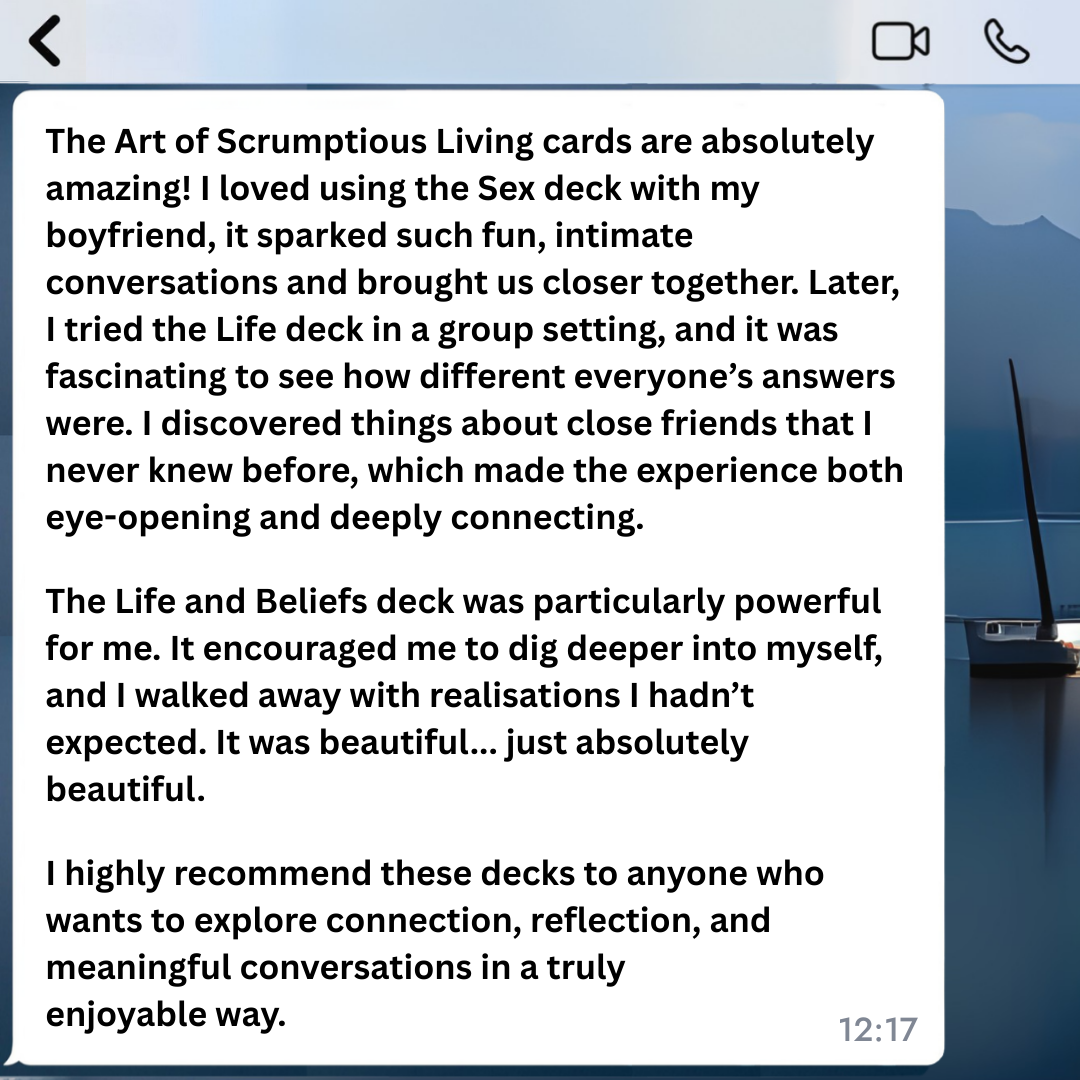
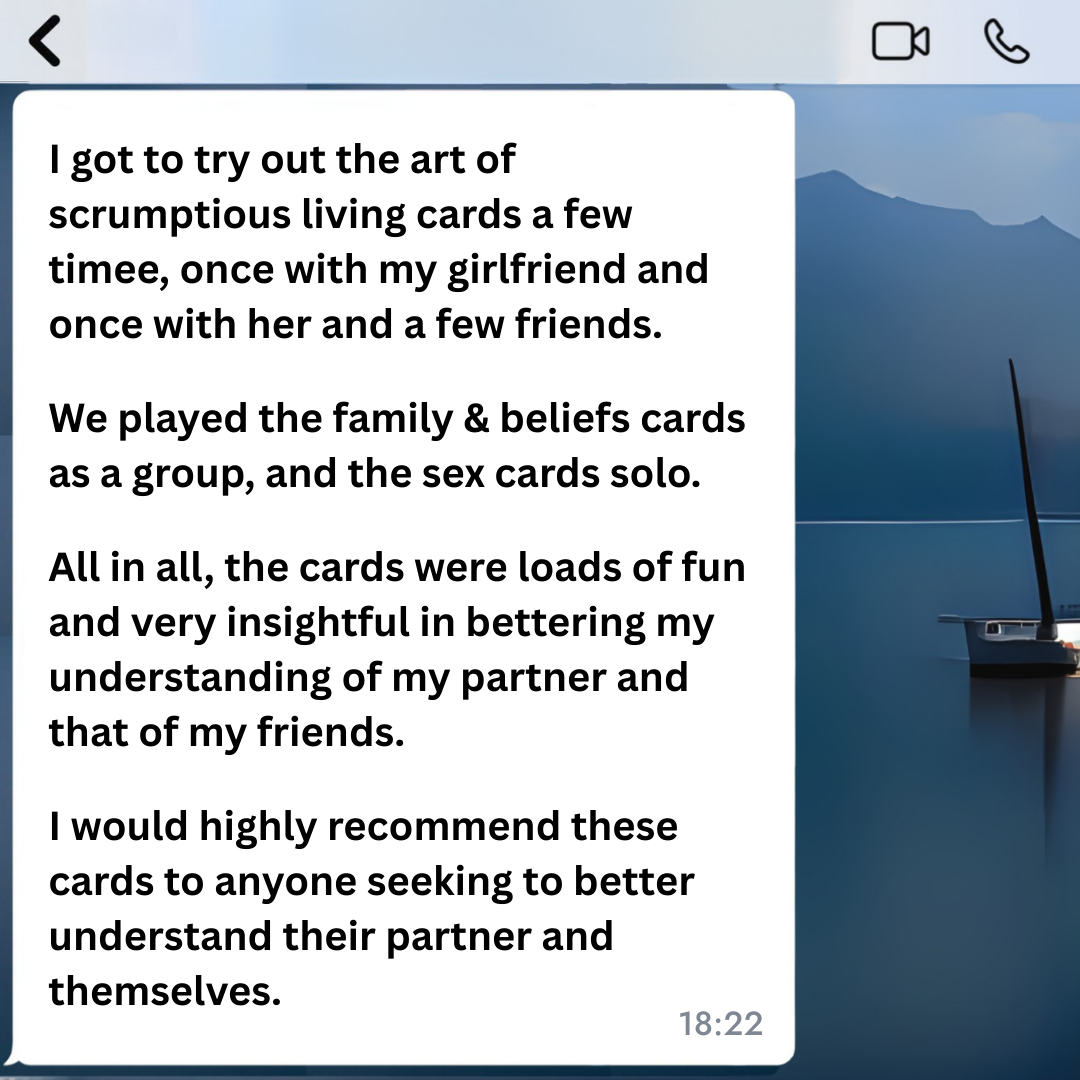
In their words

Practitioner Access
For therapists, coaches, and retreat venues
Get access to all three decks (Couples, Family & Friends, and Trust & Repair) through the app for £25 (normally £55). One payment, yours to use in every session.
For group licences or bulk physical decks: support@feelfullyyou.com