I was supposed to be teaching.
A room full of coaches, a hundred and ten of them, on a programme I had built. I was scheduled to cover the felt sense and limbic resonance. How one nervous system transmits straight into another. How birds flock. How people synchronise without deciding to, and how we can actually feel each other if we let ourselves.
I stood at the front and said nothing.
My sister had died.
I looked at them. One at a time. My eyes filled and ran, and you could hear a pin drop in a room of a hundred and ten people, because what was happening was grief itself, moving out of my body into theirs.
When I did speak, I said: I have just buried my best friend. My love. The person I had the most plans with. I am standing here because this is what it looks like to show yourself fully.
People still bring that moment up to me years later. They say they could feel it. That their own bodies knew before their minds could name what they were being handed.
That is the work. The transmission, never the explaining.
So let me tell you how I became someone it could move through.
The first crossing
I drowned when I was eighteen months old.
My sister pulled me out of the moat. I had walked into it because the algae looked like grass. My little pink ski outfit.
In the water I went through a tunnel and became one with air, grass, light. I do not have words for this that are not inadequate, and I have tried many times. What I can tell you is that there were no edges. No separation. A state of complete belonging to everything there is.
I did not consciously remember any of it for decades.
It came back during a Bufo ceremony, the 5-MeO-DMT practice used in Mesoamerican healing traditions for centuries, and when it surfaced I phoned my sister, who was already ill and in hospital, and told her what I had remembered.
She laughed. “Yes,” she said. “I pulled you out. You thought the algae was grass. Your little pink ski outfit.”
Then she went quiet.
She was making arrangements. She was ill enough to be thinking about what waited on the other side of next. She asked me to describe the tunnel again. The light. The oneness. She asked me to describe it a second time, and a third.
I understood something then about why that memory had surfaced when it did.
Going under at eighteen months old handed me the thing I would spend the rest of my life learning how to offer other people. Held in the body long before my mind could reach it: that what waits on the other side of the extremity is not what we are afraid it is. That you can go all the way in and come back.
This is the first thing I brought to the work, and I did not choose it.
The order it actually happened in
I started as a SENCO. Special Educational Needs Coordinator, teaching children on the autism spectrum to feel. To recognise emotion in themselves and in other people. To find their way back to their own nervous systems after they had been thrown out of them.
That is still the work. The tools have multiplied. The intention has not moved an inch.
Orgasmic Meditation came next, and it came first of everything else. It was the first place anybody told me that sensation is a language. That a tightening in the throat, a warmth in the left ear, a loosening across the chest are information and not symptoms. Tantra ran alongside it, and so did BDSM. Those three arrived together and I do not separate them when I look back, because they were teaching me the same thing from three directions.
Then the shamanic work, and the sacred medicine, which is where the moat came back to me.
The letters came last. EFT. CBT. Hypnotherapy. EMDR. The Erotic Blueprints certification.
People assume I started with the qualifications and worked outwards into the body. I did it the other way round, and I am certain now that I would not have understood a single one of those trainings if I had not already been through my own body first. I went and got them because I had met the edge of what I could reach without them.
None of it was designed. It was metabolised. On me, first. Then offered to other people.
Every threshold I ask a client to walk up to, I have stood at myself. A body knows the difference between a practitioner who has read about something and one who has been there. You can feel it from the moment you walk into the room.
What the container taught me
For a long stretch of those years I worked in BDSM. I want to say precisely what I mean by that, because people hear the word and land somewhere unhelpful.
Practised by consenting adults with skilled facilitation, it was one of the most powerful containers I ever worked in for people whose bodies had learned that intensity means danger.
That is one of the things violation does. It severs the wiring between the body and safety. The body learns that when sensation rises, when somebody is close, when control is not entirely yours, it is in danger. Once that is wired in it runs on its own. It is a reflex, and it closes the shutters before the mind has formed a single word.
The container did one specific thing. It taught the body that intensity and safety can be in the room at the same time.
Consent explicit and granular. The structure agreed in advance. The sensation controlled. The person holding it trained in what to do when the past arrives. Inside that, a body could meet heightened sensation without the threat response firing, and over time the wiring loosened. The body learned a different equation.
Women came out of that work knowing what pleasure felt like again. Men were able to be touched without the body leaving before they had decided anything. Couples who had been shut down for years found the wanting was still in there, buried under old learning rather than gone.
I walked that path myself before I offered it to anybody. The authority came from having been in the room, not from standing above it describing it.
The deaths
Somewhere in all of that I trained as a death doula. It is the reason I had an answer ready when my sister asked me the only question that mattered.
She died in 2017. My best friend. The person who pulled me out of the water. The person who laughed and then went quiet when I described the tunnel.
We took her home to die. The pain became so extreme that the doctor left us his own number.
On the day, she asked me: “Biem, can I go to the light now?”
I had an answer. I had been there.
After she died we stayed with her for twenty four hours. We washed her. Dressed her. Put her in her casket ourselves. One of the most beautiful things I have ever done, grief and love and presence all held in the same steady set of hands.
A year later, my father. Dementia had him by then, drifting in and out of whatever was happening in the room. When I arrived I somehow knew it was time, and I called the doctor. My father came back to himself with a clarity he had not had in months.
I explained dying to him from the inside. The tunnel. The light. The oneness. The way I knew it from my own body at eighteen months old. The doctor explained the technicalities. My father was at such peace. He thanked me in a way he never had before, and I had never once seen him like that.
He died holding my hand, knowing what was coming, knowing it was not the thing he had been afraid of.
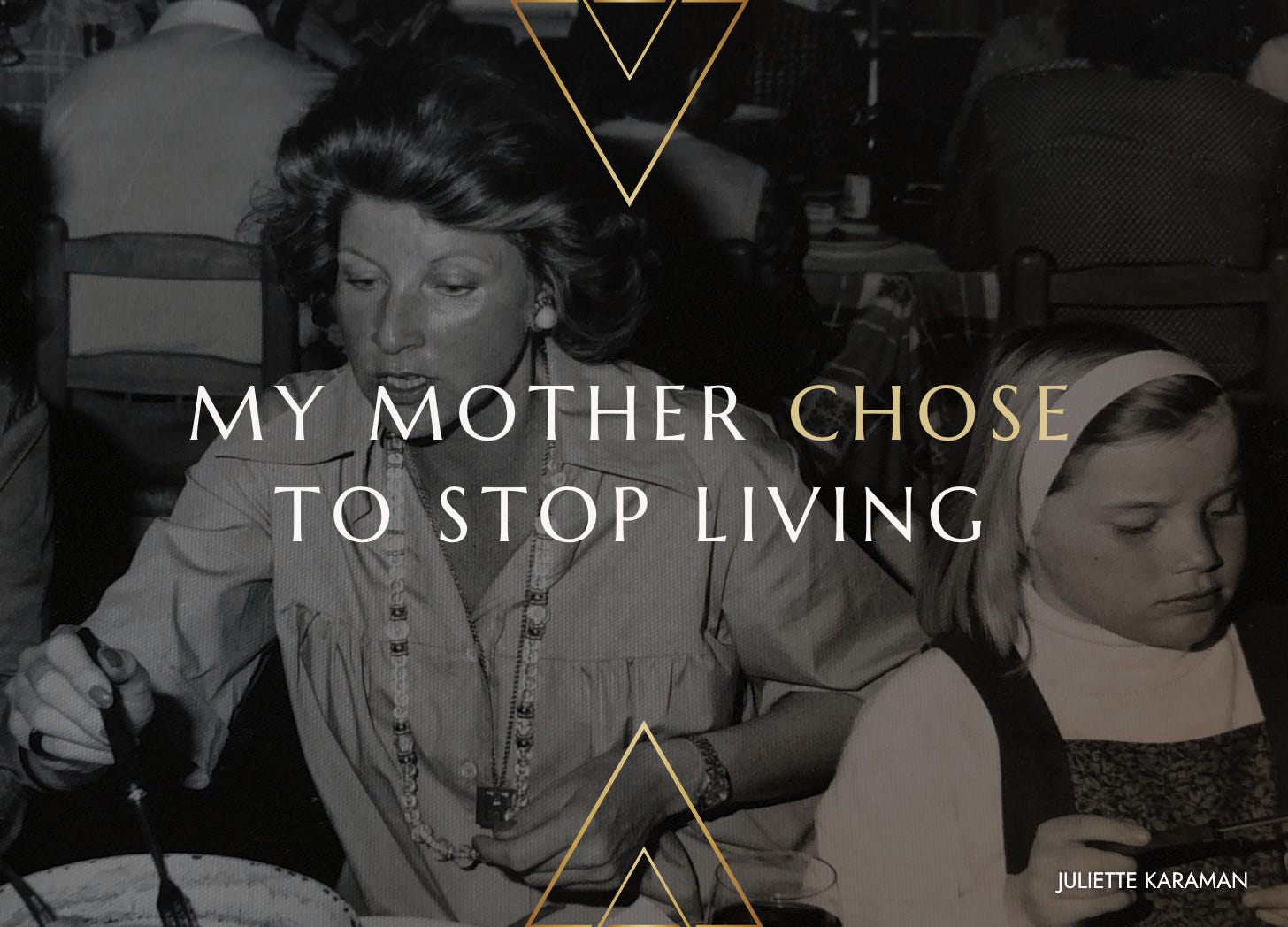
Six months after that, my mother chose to stop living.
The legal process for euthanasia in Belgium is long and careful. Psychiatrists. Two doctors. Months of preparation and paperwork, and the particular exhaustion of doing something entirely legal that the world still treats as unspeakable. I was with her every day through those months, using everything I had. The Touch Base anchor. The Duplication work. Spinal attunement. So that she could find her way to some peace, and say the goodbyes she had been holding for years.
On the day itself she was terrified.
I straddled her on the bed. I told her to look into my eyes. I told her exactly what was going to happen, step by step. Then I sang her the lullaby she used to sing to us when we were small.
She died looking at me, held in the same anchor I have used with clients in the middle of panic attacks and on aeroplanes.
That anchor does not get weaker at the threshold of death. It gets stronger. Because what it does on a plane, in a session room, and on the last morning of a life is exactly the same thing. It tells the nervous system: you are held, you do not have to brace, you can let go.
What became possible
One woman released something her body had been holding for twenty years in a single session. She sat up slowly afterwards and turned her hands over, looking at them as though she were checking they still belonged to her. “I have been carrying that for twenty years,” she said. She never told me what that was. She did not have to.
A couple came to me after twenty three years together, certain they had grown too far apart to find the way back. They had not grown apart. They had been running loops so deeply worn in that neither of them registered them as loops any more, talking to each other in body signals that neither had language for. Four sessions in, something moved. They told me afterwards they had not felt that close since the beginning.
The beginning was still in there. It had never left. It had been underneath the accumulated weight of not knowing how to speak the language their bodies had been using the whole time.
I did not study my way to this. I learned it over the last twenty seven years by living it. The near death at eighteen months, the years of taking a method apart on myself before I handed any of it to anybody, the deaths I attended and washed and sang to. That is the credential. The life is the credential.
I cannot always make you a promise. I can tell you this. I have been to the places I am going to ask you to go, and I came back.
That is what I do with it.
Juliette
Still following the breadcrumbs.
Juliette