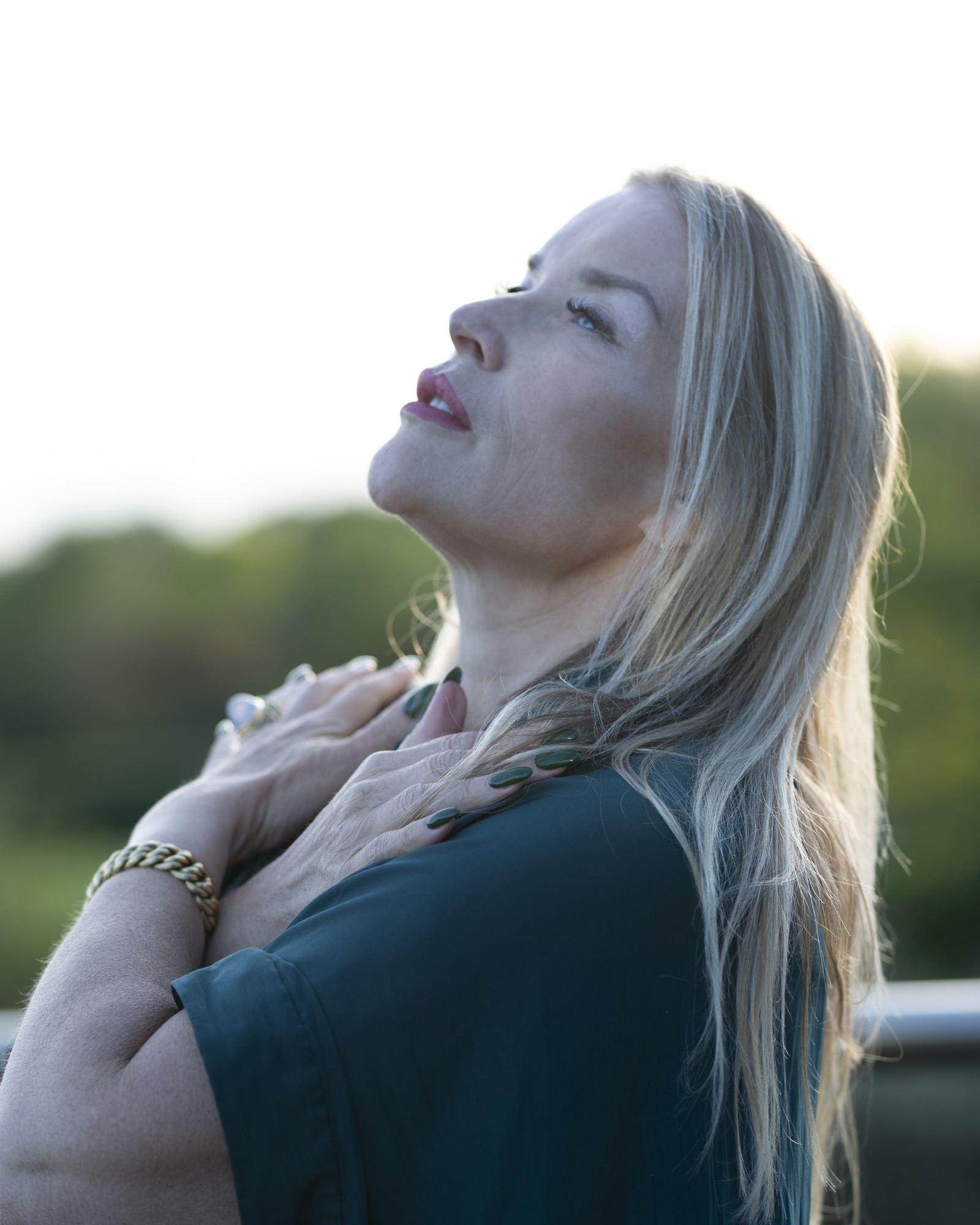
If your body has gone quiet to touch after trauma, the hand that used to feel like nothing has to feel like something again, in doses small enough that it does not slam shut. That happens by giving it small, predictable experiences it can trust. It does not come back by waiting for the right moment. It comes back through structure. This is the work Juliette Karaman teaches as The Touch Reset: how women who have gone numb after trauma feel touch again, and stay present during intimacy instead of dissociating, by building safety in the body one contained step at a time.
Sexual trauma does not end when the experience does. It lives in the body: in the flinch that arrives before the thought, in the closing that happens below conscious decision, in the part of intimacy that is managed rather than felt.
This is not dysfunction. It is the body's intelligence, working exactly as it was designed to: protecting against the repetition of what once caused harm. The pattern is that this intelligence cannot always distinguish between then and now, between the original source of threat and a safe person reaching for you in a safe bed twenty years later.
Rebuilding intimacy after trauma is not about overriding this. It is not about deciding to feel differently. It is about giving the body enough new, specific, consistent experience that its predictions begin to change.
What Trauma Does in the Body
Traumatic experience, particularly sexual trauma, creates a learning event in the nervous system. The body updates its map: this type of situation carries this level of threat. Going forward, when circumstances feel similar, certain touches, certain approaches, certain qualities of intensity or vulnerability, the body activates its protective response, often before there is any conscious awareness that it has happened.
This response can look like: freezing, going somewhere else mentally, physical tension that was not chosen, a sudden flatness where there was sensation before, the impulse to end the experience. All of these are the body doing its job. None of them are evidence that healing is impossible.
What Does Not Work
Pushing through does not work. The body that is pushed through a protective response learns only that its protection was insufficient, and responds by protecting more completely next time. Effort in the presence of a trauma response often makes the pattern more entrenched, not less.
Cognitive reassurance does not work either. Knowing intellectually that the situation is safe does not update the body's map. The map was written in sensation, and it needs to be rewritten in sensation: through specific, real physical experience, not through understanding.
Performance does not work. Performing the appearance of being okay, for a partner, for oneself, for the idea of who one wants to be, maintains the pattern underneath while appearing to move past it. The body knows the difference between what is felt and what is produced.
What Does Work: Juliette's Approach
Beginning with yourself
The foundation of trauma-informed intimacy work is the relationship between you and your own body, before any other person is involved. Touch Base® is where this begins: self-touch that is specific, intentional, and free of performance or agenda. The body learning to receive its own touch is the first step toward receiving another person's.
Building safety as a structure
Safety after trauma cannot be assumed or insisted on. It has to be built, deliberately, with specificity and patience. This means structured touch with clear containers, defined time, defined intention, defined ending, so the nervous system has something it can predict and therefore relax into. It means understanding what safety actually is in the nervous system → and building the conditions for it rather than waiting for it to arrive.
Working with the body's pace
The body has its own timeline, and it is not the timeline of the mind's intentions. Trauma-informed work honours the body's pace rather than imposing the mind's schedule. Sometimes the pace feels frustratingly slow. This is the pace at which real change happens: the pace at which the nervous system actually updates, rather than the pace at which someone decides it should have updated.
Keeping the door open for what is actually there
One of the most important things in trauma-informed intimacy work is learning to feel what is actually present: including discomfort, including partial responses, including the days when there is very little available. The capacity to be honest about what is actually there, rather than performing what should be there, is itself a profound change from the patterns trauma creates.
"Much of my work touches the unspoken aftershocks of sexual trauma, where the body holds what words cannot. I hold the field where restoration happens. Where touch stops performing and starts transforming."
Juliette's Specific Qualifications in Trauma Work
Juliette Karaman is certified in EMDR (Eye Movement Desensitisation and Reprocessing), one of the most well-evidenced trauma-processing modalities available. She is also certified in EFT (Emotionally Focused Therapy), Somatic Experiencing, NLP, and Hypnotherapy, all with direct application to trauma held in the body.
She did not approach this work only as a practitioner. She came to it through her own body, through her own remembered assault, processed through body-based work, and through the training she undertook to understand what had happened to her and to be able to hold it in others.
This is not theoretical knowledge. It is practised, embodied, and earned.
What if the fear in your body was never yours to begin with?
A woman came in convinced she was afraid her partner would leave. He had given her no reason. He was patient, present, steady. She loved him. Her body, though, carried a different version of the story. Her hands were cold. Her shoulders were held forward toward her chest. Her breath sat high and shallow. The body was braced for something her mind kept insisting was not happening.
Juliette asked when she first learned that people leave without warning. She went still. Then her grandmother came up. A woman who survived the war and never spoke a word of it. Always fine. Always funny. Always slightly oriented toward the exit. Is it possible the fear is not yours?
The body is a remarkable record keeper. It holds what happened in this life and what was transmitted through the bodies before it. Rachel Yehuda's research at Mount Sinai found that the children and grandchildren of Holocaust survivors showed measurable differences in cortisol regulation, their stress systems shaped by events that happened before they were born. The finding has since been echoed in the descendants of other atrocities. Inherited fear arrives with no attached explanation, because the explanation belongs to a room the inheritor was never in.
Inherited charge feels different in the body. Weightier. Older. A heaviness out of proportion to what the person is describing. When it is correctly located, something releases that years of thinking cannot reach. The woman told her partner the essence of what she had found, that she had been asking him to repair something that was never his to repair. That conversation had been impossible for four years. This is what becomes possible when the body's inheritance is correctly named: the end of fighting a war that belongs to someone else.
Juliette works with individuals carrying sexual trauma and couples navigating intimacy in its wake. Her work is confidential, trauma-informed, and shaped by what she has learned over the last 27 years.
Take the quiz: feelfullyyou.com/touch-reset-quiz
Work with Juliette: feelfullyyou.com/work-with-me