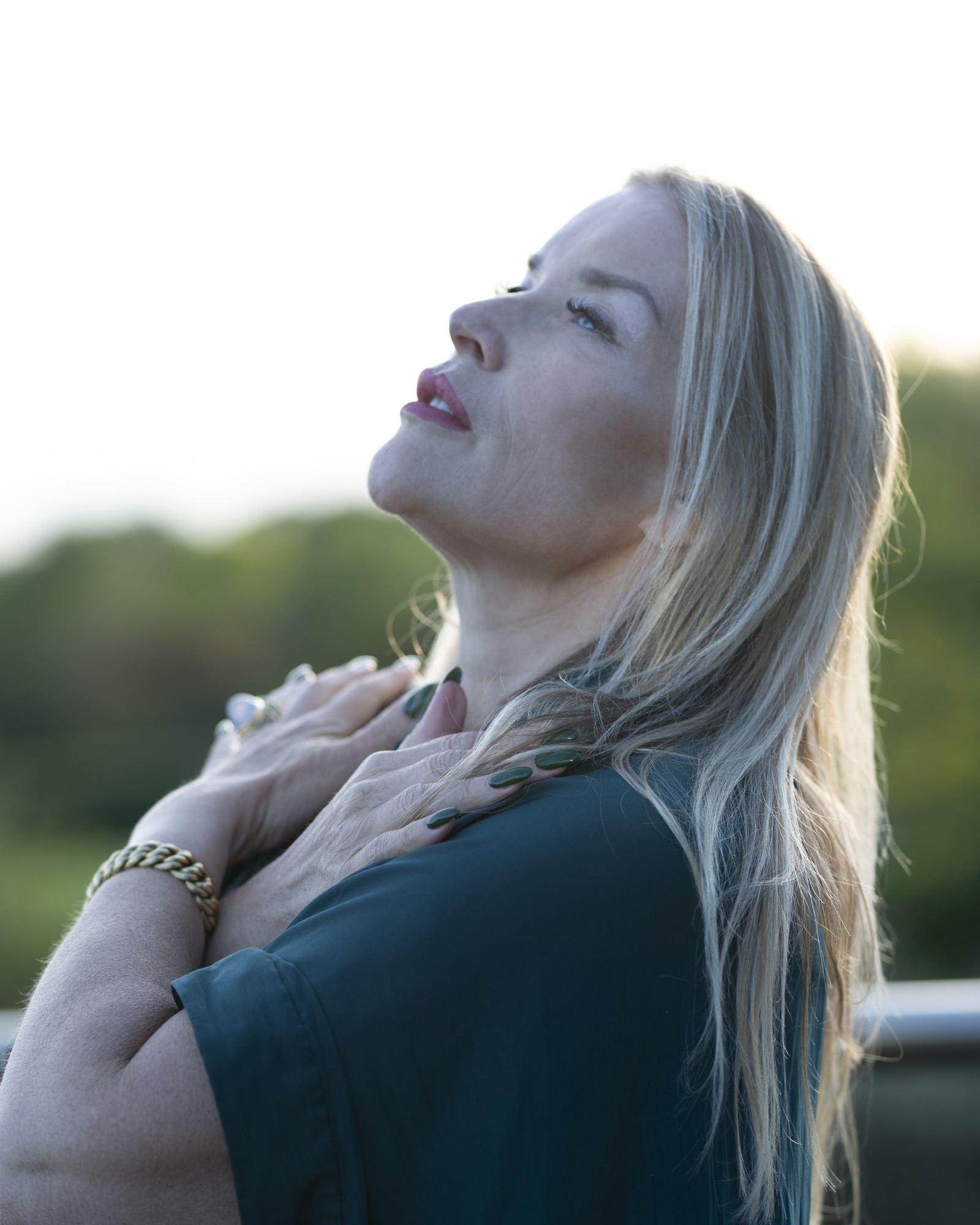
The Spiritual Touch Language is the most difficult to describe, and the most recognisable when you have experienced it. It is touch that reaches something beyond the physical. Through the body, through it, to something that feels more essential than skin and muscle and nerve endings.
Reverence. That is the word most people with this primary language eventually land on. Not tenderness, which can be fond without being sacred. Not care, which can be competent without being present to what it is touching. Reverence. The quality of attention that treats what it touches as holy.
For someone whose primary language is Spiritual, casualness in touch feels like invisibility. Not rejection. Not harm. A particular kind of not-being-seen that is one of the loneliest experiences available. To be touched without reverence, when this is your primary language, is to be passed through rather than met.
What the Spiritual Language Actually Is
The Spiritual Touch Language is the language of being held as more than a body. It is fed by the sense that the person touching you is touching more than your skin. That they are meeting something essential in you, your soul, your essence, the part of you that exists beneath and beyond the daily self.
This does not require religious belief. It does not require a shared spiritual framework. What it requires is a quality of attention that is genuinely awed by what it encounters. The person touching from a Spiritual place is not managing a body. They are not completing an act of affection. They are in contact with something they find, however quietly, remarkable.
The body of a Spiritual primary feels this. Feels when they are being touched with that quality, and feels its complete absence when they are not. The difference is not subtle. It is the difference between being handled and being held. Between being an object of affection and being a being that is genuinely encountered.
"Touch that reaches something beyond the physical. Reverence. Being held as something sacred. The sense that the person touching you is touching more than your skin."
Where This Language Comes From
In 27 years of body-based work, Juliette has found the Spiritual Touch Language in people who have experienced a particular kind of invisibility. Not necessarily neglect or abuse, sometimes simply the experience of growing up in households where touch was functional. Where bodies were cared for without being honoured. Where love was real but the sacred dimension of physical connection was never accessed.
These people have often developed a very strong sense of the non-physical, intuition, energetic sensitivity, a deep relationship with something they call spirit or source or the essential, and they bring this same sensitivity to touch. They are not asking for something otherworldly. They are asking for the quality of attention that recognises that what they are is more than physical, and touches them from that recognition.
What Goes Wrong
The most common failure for this language is competence without reverence. A partner who touches well, attentively, gently, with genuine care, but without the dimension of awe that the Spiritual language is seeking. From the outside it looks like enough. From the inside it is not quite enough. Something keeps being missing. The person may not be able to name it. They know only that they feel, in the most loving relationship, a particular kind of aloneness.
The second failure is spiritual language without embodiment, grand words about love and souls that never make it into the hands. The Spiritual Touch Language needs the reverence to be physical. Present in the touch itself. Not described. Not promised. Delivered through the quality of contact.
What Lands for the Spiritual Language
- Slowness. Stillness. The sense that the person touching her is in no hurry, because what they are touching is worth all the time they have
- Eye contact before and during touch, the held gaze that says: I see you. Not your body. You
- Touch that feels ceremonial, in the quality of attention given to it rather than in how performed it looks
- Being held without agenda, without expectation, without destination, in a silence that feels full rather than empty
- Touch that happens at threshold moments: in grief, in transition, at the edge of sleep, in the moments when the daily self is thinnest and something more essential is present
How to Know If This Is Your Primary Language
- Casual, efficient touch from someone you love leaves you feeling cared for but strangely alone
- The most affecting touch you have ever received felt, in some way, like being recognised, not just touched
- You are moved by threshold experiences, dying, birth, grief, ceremony, in a way that connects directly to your experience of physical touch
- You can feel when someone's hands are merely present versus when they are genuinely in contact with something they find sacred
- You have always wanted, without being able to name it, to be touched as though you matter. Not as a kindness. As a truth.
The Spiritual Touch Language is one of five in the Touch Languages™ framework created by Juliette Karaman. Covered in depth in The Touch Languages™, her forthcoming book.
Juliette's work at the threshold, including her sacred end-of-life work, The Final Touch, draws directly from the Spiritual Touch Language. Enquire about The Final Touch →
Work with Juliette: feelfullyyou.com/work-with-me